
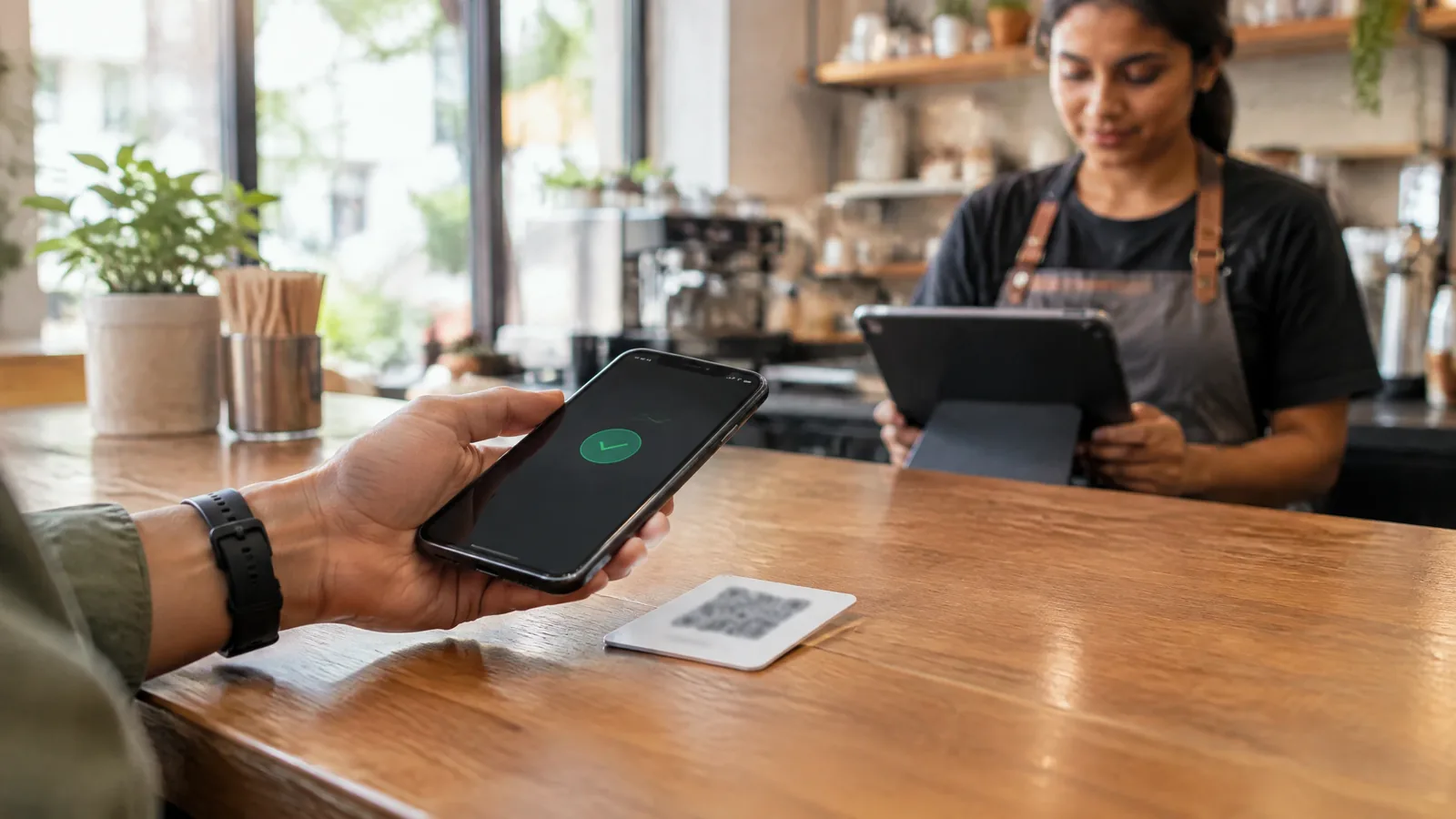
UPI is an NPCI-operated instant payment system that carries a payment instruction from a user's app to participating banks. The payer reviews the receiver and amount, authorizes the debit with a UPI PIN, and receives a status after NPCI routes the instruction and the relevant banks act on it. The app is the interface; the linked bank accounts hold the money.
What UPI is—and what it is not
Unified Payments Interface is an instant payment system developed and operated by the National Payments Corporation of India. NPCI describes UPI as being built over the IMPS infrastructure and designed for immediate transfers between bank accounts. It works around the clock and allows multiple participating banks and applications to use a common interoperable payment framework. [1]
UPI is not one mobile app, one bank or a stored-value wallet. A customer can use a bank's own app or an eligible third-party application, but the visible interface is only one layer of the transaction. In a standard account-to-account payment, the funds remain in the linked bank account until the payer authorizes the debit.
A UPI ID—also called a virtual payment address—is a routing identifier. It can help a payer reach an eligible linked account without repeatedly typing the receiver's full account number and IFSC. The UPI ID is not itself the bank account and should not be treated as proof that the displayed receiver is correct.
The six actors in a typical UPI payment
The same organization can hold more than one role, and not every app is a third-party provider. The map shows the functions a reader should identify rather than assuming the app performs the whole transaction.
| Actor | Role in the payment |
|---|---|
| Payer | Chooses the destination and amount, checks the displayed receiver, and authorizes a debit. |
| UPI app / TPAP | Provides the customer interface and participates through a Payment Service Provider bank. It does not automatically hold the customer's bank balance. |
| PSP bank | Connects the app or its own interface to UPI, onboards users, links funding accounts and supports authentication and complaints. |
| NPCI UPI system | Owns and operates UPI, sets participant rules, and provides routing, processing and settlement services to members. |
| Payer's bank | Authenticates the payment instruction, applies account and risk checks, and decides whether the debit can proceed. |
| Payee's bank | Receives the routed instruction, credits the destination when the payment succeeds and returns a status. |
The participant disclosure assigns NPCI the operating and routing role, PSP banks the connection and onboarding role, and TPAPs the app-service role through a PSP bank. Customer banks remain responsible for their account-side decisions and records. [3]
What happens when a bank account is linked
Registration connects a user's mobile device and eligible bank account to a UPI interface. NPCI's product material describes two-factor authentication using the mobile number linked with the bank and the UPI PIN. The PSP bank is responsible for onboarding and authenticating the user, directly or through a third-party app, and for linking the funding account to the user's UPI ID. [1] [3]
The UPI PIN is created or set during registration and is used to authorize bank transactions. NPCI states that the app does not store or read the PIN and that bank support staff will not ask for it. A bank-issued MPIN and a UPI PIN can be different credentials; users should follow the protected setup flow inside their chosen UPI application.
Linking an account does not turn the app provider into the bank that holds the deposit. It establishes a permitted interface and participant relationship through which instructions can be sent to the relevant bank.
How a UPI payment works step by step
This sequence describes a common bank-account push payment. Product variants can add or change interface steps, but the user should still be able to identify the debit authorization, routed instruction, bank result and final status.
- Choose how to payThe payer selects a UPI ID, a mobile-linked destination, account details, a QR code or an app-to-app intent. The exact choices depend on the participating app and bank.
- Check the receiver and amountThe app displays the resolved receiver name and payment amount. This is the last useful point to stop a payment to the wrong person or merchant.
- Authorize the debitThe payer enters the UPI PIN on the app's protected UPI PIN screen. The PIN authorizes money to leave the linked bank account; it is not needed to receive money.
- Send the payment instructionThe app passes the instruction through its PSP relationship into UPI. A third-party app participates through a PSP bank rather than operating the UPI system itself.
- Route through NPCIThe UPI system identifies the relevant participants and routes the online message between the payer side and the receiving side.
- Authenticate and debitThe payer's bank validates the instruction and applicable controls. A wrong PIN, unavailable service, insufficient funds or another bank decision can stop the payment here.
- Credit the receiverWhen the transaction succeeds, the receiver's bank posts the credit to the destination account and returns the resulting status through the network.
- Return the statusThe payer and payee interfaces receive a success, pending or failure message. The app message should be checked against the transaction record and bank-account entries when anything is unclear.
A success screen, a bank-account posting and inter-member settlement are related records, not interchangeable words. The customer sees a real-time transaction result, while participant clearing and settlement remain scheme operations governed by NPCI rules.
Push, QR, intent and collect flows
A push payment begins with the payer. The payer enters or selects a destination, reviews the receiver and amount, and authorizes a debit. A transfer to a UPI ID and a payment initiated by scanning a merchant QR are both push-style journeys from the payer's perspective.
A QR payment can use a static code, where the payer may enter the amount, or a dynamic code containing transaction-specific information. The QR is an instruction aid, not a receipt. The payer still has to check the resolved receiver and confirm the debit.
An app intent starts when a website or app hands payment details to a UPI application on the same device. The payer reviews and authorizes inside the UPI app before returning to the original journey. A merchant's checkout status should not be treated as more reliable than the bank and UPI transaction status when the two disagree.
A collect request begins with the intended payee asking the payer to approve a debit. It is not a passive way to receive funds. An unexpected collect request should be rejected, especially when a caller claims that approving it will credit money to the user's account.
What the UPI PIN actually authorizes
The UPI PIN authorizes money to leave the linked account. NPCI's safety guidance is unambiguous: the PIN is required to deduct money, not to receive it. The PIN should be entered only on the application's UPI PIN page and must not be shared with a caller, merchant, support agent or another user. [2]
A PIN prompt therefore deserves context. The payer should know which receiver and amount were displayed immediately before the prompt. If the surrounding request is unexpected, the receiver name is unfamiliar, or the action was described as a refund or receipt, the safe response is to stop rather than authorize first and investigate later.
Authentication lowers some risks but does not prove that the intended person is on the other side. A scam can persuade a legitimate user to authorize a real debit. Receiver verification and payment intent remain separate safeguards.
Why a payment can be pending, failed or unclear
A payment journey depends on several systems returning messages in sequence. Network interruption, participant-bank availability, a delayed response, risk checks, an incorrect PIN, insufficient funds or an app refresh problem can prevent a clean result. A failure on one screen does not always establish whether a debit was posted; a pending screen does not establish that the receiver was credited.
Use three records before retrying: the transaction detail in the initiating app, the linked bank-account entry and the receiver's actual account result. Save the transaction reference and timestamp. Avoid sending another payment solely because the merchant or receiver has not seen an alert.
There is no single refund or reversal timeline that can be safely applied to every status and transaction type without checking the current rule and the exact failure. The transaction-specific complaint route is the appropriate next step when the status remains unresolved.
How UPI complaints move through the participant chain
The participant disclosure says a user can open a complaint against the relevant fund-transfer or merchant transaction in the UPI app. The first level is the third-party app provider where applicable, followed by the PSP bank, then the customer's bank and NPCI. After those channels are used, the applicable ombudsman route may be available. [3]
The best complaint record identifies the transaction, amount, date and time, payer and receiver details as displayed, current status, bank-account effect and the reference issued by each support level. Do not send a new payment, share a PIN or install remote-access software because someone claims those actions are needed to resolve the first transaction.
Five checks before confirming a UPI payment
- Read the receiver name.Confirm the displayed person or merchant before paying; a QR image or UPI ID can point somewhere unexpected.
- Use the PIN only for a debit.No legitimate receipt of money requires you to enter a UPI PIN.
- Scan to pay, not to receive.Scanning another person's QR code initiates a payment journey from your side.
- Keep the PIN inside the protected screen.Never disclose it in a call, chat, form or screen-sharing session.
- Reject remote-control requests.Do not install screen-sharing or SMS-forwarding software at the direction of an unknown person.
These checks follow NPCI's UPI Safety Shield. They reduce common scam exposure but do not guarantee that every transaction, device or counterparty is safe. [2]
How UPI fits into India's payment system
NPCI owns and operates UPI and provides participant routing, processing and settlement services. PSP banks connect customer-facing applications to the system, while customer banks hold accounts and act on payment instructions. RBI supplies the statutory and supervisory context for India's payment systems; it does not process each consumer UPI message. [3]
The architecture is interoperable: a user of one participating app can pay a UPI address associated with another participating app or bank. NIPL describes a broker model with centralized orchestration, role-based message transmission, stateless APIs and asynchronous request and response processing. Those design choices support scale, but operating resilience still depends on the participating institutions and their controls. [4]
For the broader institutional map, read FinTech regulation in India. For the full technology context, start with what FinTech means and the Payment Technology topic hub.
Common questions about how UPI works
Does a UPI app hold my money?
In a standard bank-account UPI flow, the money is held in the linked bank account. The app is the customer interface and payment-instruction layer. Some apps may separately offer other regulated products, so the exact product and legal entity still matter.
Is a UPI PIN required to receive money?
No. NPCI's UPI Safety Shield says the UPI PIN is entered only to deduct money. A request to enter a PIN, scan a QR code or approve a collect request in order to receive money is a warning sign.
Who operates UPI?
NPCI owns and operates the Unified Payments Interface. It sets participant rules and provides transaction routing, processing and settlement services to members within India's regulated payment-system framework.
What is the difference between a UPI ID and a bank account?
A UPI ID, also called a virtual payment address, is an address used to route a payment without repeatedly sharing full account details. It points to an eligible linked funding account; it is not itself a bank account balance.
What should I do if a UPI payment is pending?
Check the transaction in the same app and compare it with the linked bank-account record before trying again. If the status remains unresolved, use the transaction-specific complaint function and retain the reference. Avoid sending a second payment only because one screen has not refreshed.
Are UPI limits the same for every payment?
No universal limit should be assumed. Limits can depend on the transaction type, participant bank, app, account, risk controls and current scheme rules. Check the current terms shown by the relevant bank or app for the specific payment.
Can a QR code be used to receive money?
A merchant or person can display a QR code so another person can pay them, but a user should not scan someone else's QR code to receive money. Scanning a QR code starts a payment instruction from the scanner's side.
What is a collect request?
A collect request is a payment request sent to a payer. The payer must review the beneficiary and amount and actively authorize the debit. The notification is not evidence that money has already been credited.
Primary sources and change record
The mechanism, role and safety statements on this page use NPCI and NPCI International material retained in the dated research file. Source names are non-clickable because finorasjournal keeps all public navigation on this website.
Exact source URLs and search-result comparisons are retained in the editorial research record. Public source labels are plain text and create no third-party backlinks.
27 Sep 2026: First edition prepared. Added participant map, eight-step payment flow, push/QR/intent/collect distinctions, UPI PIN rule, pending-payment checks, complaint escalation and NPCI safety guidance.
Read finorasjournal's research, revision and correction standards.